
ASTM A307 Bolts
ASTM A307 carbon steel bolts — low/medium carbon, 60,000 psi minimum tensile, Grades A and B, hardness B69–B100. The standard general-purpose low-strength inch-series grade for non-structural joints.
Last updated: 2026-11
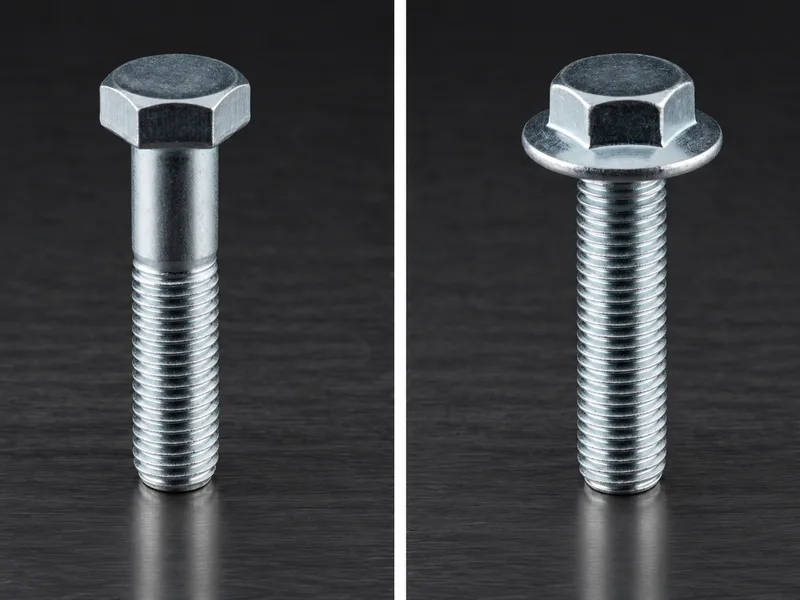
Specifications
A307 is the general-purpose low-carbon steel bolt specification of the inch series: 60,000 psi minimum tensile, no quenching and tempering, and the lowest cost per fastener in the structural catalog. Grade A covers general use — cast iron to steel connections, light framing, equipment anchoring; Grade B covers flanged joints in piping systems with its tight tensile window (60 ksi min, 100 ksi max) to control bolt load on gaskets. It is not a substitute for A325/F3125 in engineered structural connections.
| Standard | ASTM A307, Grade A (general) or Grade B (piping flanged joints); size range 1/4"–4" |
|---|---|
| Material | Low or medium carbon steel, no quench and temper |
| Tensile strength, min | 60,000 psi (Grade B: 60,000 psi min / 100,000 psi max) |
| Proof / yield (chart row) | 33,000 psi proof, 36,000 psi yield — the SAE Grade 1-equivalent row of the inch-series bolt-grade chart |
| Hardness | B69–B100 (Grade A); B69–B95 (Grade B) |
| Nut spec | ASTM A563 (standard carbon and alloy steel nut specification) — state the nut spec and grade with the bolt, not just "nuts" |
| Joint type | Low-pressure, static-load, non-structural connections |
| Typical applications | Light structural framing, equipment anchoring, support brackets, pipe flanges (Grade B), general construction |
| Finishes | Plain, zinc plate, hot-dip galvanized |
| Grade | Field | Recorded value |
|---|---|---|
| ASTM A307 A | Nominal size range | 1/4 in to 4 in |
| ASTM A307 B | Nominal size range | 1/4 in to 4 in |
| ASTM A307 A | Strength grade | ASTM A307 Grade A — tensile min 60 ksi; hardness B69–B100; size range 1/4 in to 4 in |
| ASTM A307 B | Strength grade | ASTM A307 Grade B — tensile 60 ksi min / 100 ksi max; hardness B69–B95; size range 1/4 in to 4 in |
Industry reference — figures as printed in the collected technical tables; availability confirmed per quotation.
Where this grade fits
A307 is the low-strength, non-structural grade: 60,000 psi minimum tensile, no quench and temper, and correspondingly low torque values — a static-load joint grade, not a substitute for F3125 A325 in engineered connections. Because it is not hardened, neither hydrogen embrittlement nor fatigue govern its use; the joint type does.
Deep read: How to Determine Tightening Torque and Choose a Tightening Method for a Bolted Joint
Materials
- Low carbon steel
- Medium carbon steel
A307 is carbon steel at 60,000 PSI minimum tensile with no quench-and-temper requirement.
Grade A carries a single 60 ksi minimum with hardness up to B100, while Grade B (the flanged-joint variant) adds a 100 ksi maximum and a tighter B69-B95 band — state the grade letter on the order, not just the A307 callout.
Where A307 sits on the inch-series strength ladder: the bolt-grade chart row for ASTM A307 is low-carbon steel at 33 ksi proof, 60 ksi tensile and 36 ksi yield — the same numbers as SAE Grade 1, the entry point of the ladder. One step up, SAE Grade 2 carries 74 ksi tensile in sizes up to 3/4 inch; A325/F3125 sits at 120 ksi with a quench-and-temper requirement A307 does not have. That is the whole boundary: A307 buys the lowest cost per fastener, not a share of structural capacity.
The specification's own scope is wider than "bolt": ASTM A307 covers carbon steel bolts, studs and threaded rod at 60,000 psi tensile — which is why Grade B exists as the flanged-joint variant covering threaded rods, studs and bolts. On foundations, mind which word the drawing uses: light-duty anchoring (sign supports, equipment pads, brackets) is a routine A307 use case, but engineered anchor rods are typically specified under ASTM F1554 — a grade with its own strength levels (36 / 55 / 105 in the same chart) — and the RCSC structural-joint provisions explicitly do not apply to anchor rods. If the anchor carries calculated structural load, ask whether the specification actually means F1554 before quoting A307.
Nut side and paperwork: A563 is the standard specification for carbon and alloy steel nuts, and that is the family these hex bolts pair with — name the nut spec and grade alongside the bolt instead of leaving "nuts" generic on the RFQ. A mill test report on a lot can verify what the grade actually specifies: the 60,000 psi tensile minimum, the Rockwell band for the grade ordered (B69–B100 Grade A, B69–B95 Grade B), and the grade letter itself — because the two grades differ in their maximums, a certificate that names only "A307" without the grade letter does not fully identify the delivered lot. What it cannot verify is joint adequacy: nothing on an A307 certificate speaks to a connection engineered for A325, because A307 is not produced to the structural-bolt requirements (heavy-hex geometry, controlled thread lengths, rotation-capacity testing) in the first place.
Ordering & documentation
Documents
Shipments of ASTM A307 Bolts are backed by Mill Test Certificate (MTC), Dimensional Report, Salt Spray Test Report on request, with full batch traceability from raw material to finished product. Quality management for ASTM A307 Bolts orders follows the owner-confirmed compliance list: ISO 9001:2015, RoHS, REACH. Exact document sets are confirmed on the order.
Quotation
- The product family (ASTM A307 Bolts), product standard/designation and drawing or part number.
- The dimensions that apply to this part — such as size, pitch, length, thickness, fit, grip or groove geometry.
- Material/grade, heat-treatment condition and surface finish, together with the service environment.
- Quantity per size, delivery destination and required test or traceability documents.
Sample & supply
Supply source for ASTM A307 Bolts: own manufacturing plus qualified outsourcing (per the owner-confirmed scope of supply (own production plus outsourcing)).
Minimum order quantity for astm a307 bolts is 1,000–10,000 pieces depending on size (applies to the standard sizes and finishes for astm a307 bolts; mixed, special or custom variants are quoted — final commercial terms per quotation) Stock items for astm a307 bolts run 3–7 days. High-strength and custom parts for astm a307 bolts run 15–25 days. Quantities or variants of astm a307 bolts outside the standard range are confirmed at quotation.
Storage & shipping
ASTM A307 Bolts are packed for export and shipped factory-direct to buyers in Europe, Asia, the Americas and the Middle East. Store astm a307 bolts dry and protected until installation, and keep coated parts in their packaging until use; specific packing and preservation requirements can be stated on the order and confirmed at quotation.
Frequently asked questions
Can A307 bolts be used instead of A325 structural bolts?
No — not where the connection is engineered. A307 carries roughly half the tensile strength of F3125 Grade A325 (60,000 vs 120,000 psi) and is not produced to the structural-bolt heavy-hex, thread-length and rotation-capacity requirements that structural codes such as AISC and DOT specifications reference. A307 is the correct, economical choice for static, low-load and anchoring work; the moment a connection is designed to a structural code, the specification will require A325 or equivalent.
Which grade should I order — A307 Grade A or Grade B?
Decide by the joint, not by habit. Grade A is the general-purpose grade — the collected application notes list cast iron, structural steel and general construction. Grade B exists for flanged joints in piping systems and covers threaded rods, studs and bolts, with a 60,000 psi minimum and a 100,000 psi maximum tensile window that controls the bolt load a gasket sees. If your parts land on a pipe flange, order Grade B and state it on the RFQ; everywhere else Grade A is the default. Both grades share the same 60 ksi minimum — the difference is the ceiling and the application, so an RFQ that says only "A307" will be read as Grade A.
I need anchor bolts — is A307 the grade to ask for?
For light-duty anchoring it is the economical answer: collected application notes list anchor bolts, sign supports and basic construction hardware among A307's intended uses. The boundary is load engineering. Anchor rods on engineered foundations are typically specified under ASTM F1554 rather than under any bolt grade — the same strength chart that lists A307 at 60 ksi lists F1554 at 36 / 55 / 105 ksi levels — and the RCSC structural-joint specification states its provisions are not applicable to anchor rods. So: static, light loads can stay on A307; anything with a calculated structural demand should be re-checked against F1554 before you quote, and the drawing callout is the authority on which one applies.
What is the MOQ and lead time for this bolt grade?
The minimum order quantity for ASTM A307 Bolts is 1,000–10,000 pieces depending on size. Stock items of ASTM A307 Bolts ship in 3–7 days; high-strength and custom parts in 15–25 days. Common diameters of ASTM A307 Bolts are widely stocked; confirm the exact schedule against quantity and size mix at quotation.
What should an RFQ for this bolt grade state?
For ASTM A307 Bolts, state the standard and grade (for example ISO 4017 Class 8.8 or ASTM F3125 Grade A325 Type 1), diameter and length, thread type (metric coarse or UNC/UNF), finish (plain, zinc, or hot-dip galvanized where the grade permits), required certificates such as a mill test report per EN 10204 3.1, and quantity per size — plus destination country.
Related knowledge
- What Bolt Property Classes 8.8, 10.9 and 12.9 Encode — and When High Strength Stops Being the Right Choice
- Bolt Grade Selection: ISO 898-1 8.8/10.9/12.9 vs ASTM A307 and A325
- 8.8 vs 10.9 vs 12.9 Bolts: Strength, Hardness and Cost — What the Evidence Settles
- Calculating Bolt Preload and Clamp Force: Torque, Friction and Tightening Method
- How to Determine Tightening Torque and Choose a Tightening Method for a Bolted Joint
- Fastener Failure Modes: Which Fatigue, Creep and SCC Controls the Evidence Supports
- Hydrogen Embrittlement in High-Strength Bolts: Which Grades Need Controls, Which Coatings and Baking Schedules Are Acceptable, and What to Require Before the RFQ
Request a Quote
Get factory-direct pricing from the manufacturer.
What to include in your ASTM A307 Bolts inquiry
- ✓ Name the bolt standard and product form, then give nominal diameter, pitch, length and threaded length.
- ✓ State the applicable property class or material grade, head style, and coating or finish.
- ✓ Identify the mating nut/washer and the joint duty; include any specified preload, tightening method or friction condition.
- ✓ Give quantity per size, destination and required material or inspection certificates.
- ✓ Factory-direct pricing for your ASTM A307 Bolts
- ✓ Standard and custom specifications
- ✓ Factory-direct export to buyers in Europe, Asia, the Americas and the Middle East
- ✓ Full fastener family support