
ASTM F3125 Grade A325 Bolts
Heavy hex structural bolts per ASTM F3125 Grade A325 — medium carbon steel, quenched and tempered, 120,000 psi minimum tensile and 85 ksi proof load across all sizes 1/2"–1-1/2", Types 1 and 3. The standard structural steel connection bolt.
Last updated: 2026-11
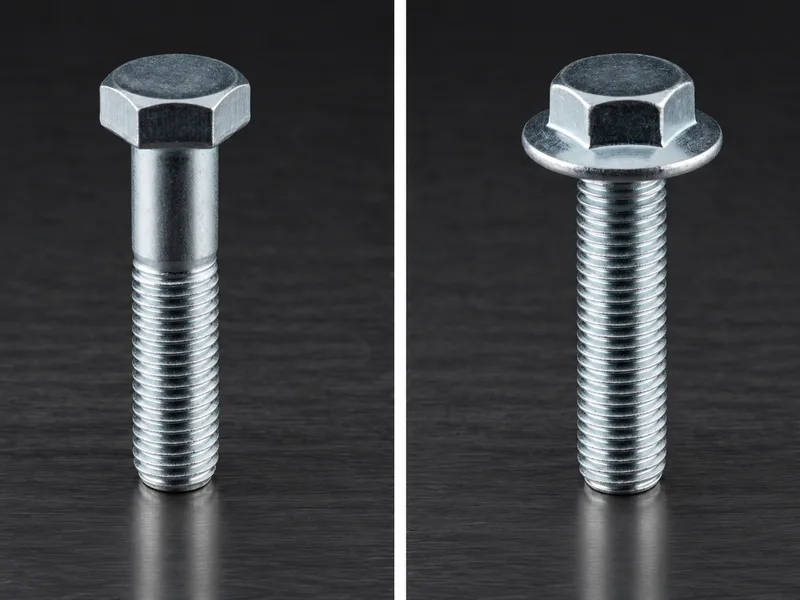
Specifications
A325 (now standardized under ASTM F3125) is the most widely used structural steel bolt in North America: heavy hex head, controlled thread and shank lengths so threads stay out of the shear plane, and a quenched-and-tempered medium carbon steel body good for 120,000 psi minimum tensile across the full 1/2"–1-1/2" range. Type 1 is the standard medium carbon steel bolt and may be hot-dip galvanized; Type 3 uses weathering steel for unpainted, atmospheric-corrosion-resistant connections. It installs under torque or tension control with matching heavy hex nuts and hardened washers.
| Standard | ASTM F3125 Grade A325 (supersedes ASTM A325); heavy hex structural bolt |
|---|---|
| Material | Type 1: medium carbon steel, quenched and tempered; Type 3: atmospheric-corrosion-resistant (weathering) steel |
| Tensile strength, min | 120,000 psi (all sizes 1/2"–1-1/2") |
| Proof load, min | 85 ksi (all sizes 1/2"–1-1/2") |
| Hardness | C25–C34 (Type 1, all sizes; Brinell 253–319) |
| Galvanizing | Type 1 may be hot-dip or mechanically galvanized; Type 3 is supplied bare (weathering steel) |
| Installation | Torque wrench or tension control (TC) pre-tensioning; matched heavy hex nuts (A563) and hardened washers (F436) |
| Compatible heavy hex nuts (A563) | Type 1 plain: C recommended, C3/D/DH/DH3 suitable; galvanized: DH; Type 3: C3 recommended, DH3 suitable; A194 2H is the common DH substitute in 3/4" and larger |
| Galvanizing process | Hot-dip per F2329 or mechanical per B695 Class 55; every threaded component of the assembly galvanized by the same process — no mixed processes in a lot |
| Pre-installation verification pretension (RCSC Table 7.1) | Group 120: 13 / 20 / 29 / 41 / 54 / 67 / 85 / 102 / 124 kips at ½ / ⅝ / ¾ / ⅞ / 1 / 1⅛ / 1¼ / 1⅜ / 1½ in |
| Typical applications | Steel frameworks, bridge and highway construction, load-bearing structural connections |
Materials
- Medium carbon steel, quenched and tempered (Type 1)
- Weathering steel (Type 3)
Naming on documents: the original standalone ASTM A325 and A490 documents have been withdrawn; A325 and A490 are now formal strength grades inside ASTM F3125/F3125M, and formal technical documentation should reference ASTM F3125 Grade A325 / Grade A490 for specification correctness. In practice drawings still say "A325" — that ordering is unambiguous to any structural supplier, but an MTR citing the withdrawn designation is a documentation mismatch worth correcting.
Where the F3125 frame ends: ASTM A449 may be applicable to certain general-purpose or non-heavy-hex fastener configurations and to sizes outside the F3125 dimensional scope — past 1-1/2 in diameter the general-purpose route is A449, not A325. And an anchor rod is not a structural bolt here: anchor rods are typically specified under ASTM F1554 rather than ASTM F3125 Grade A325 or A490, so a foundation RFQ that says "A325 anchor bolts" usually wants F1554 with the strength re-checked.
Joint conditions a fabricator will name: in bearing-type connections the N condition is a shear plane that passes through the threaded portion of the bolt (the conservative default), the X condition is a shear plane that lies within the unthreaded bolt shank — which requires careful bolt-length selection so the plane misses the threads — and SC marks a slip-critical connection, where the connection relies on bolt pretension and friction to resist slip. Which condition applies is the designer's call from the connection schedule; this page cannot verify it, so state the condition (or the governing specification) on the RFQ.
When the connection actually needs A490 instead: the upgrade buys clamp force per bolt — 150 vs 120 ksi minimum tensile — and only pays off when bolt count or joint layout makes A325 impractical; upgrading does not guarantee a stronger joint, because plate bearing and tear-out frequently become the controlling limit states rather than the bolt. Staying on A325 is the forgiving default for good reasons: A325 Type 1 tolerates hot-dip galvanizing (A490 forbids it on hydrogen-embrittlement risk), plain A325 is the group with a defined reuse allowance (A490's group is barred), and A490's higher-strength steel carries more susceptibility to stress corrosion and hydrogen cracking in service — one reason it is less common in bridge and highway work. If capacity is adequate at 120 ksi, the specification answer is A325.
Reuse is graded, and coating revokes it: plain Group 120 heavy hex bolts — A325's group — may be reused in snug-tightened joints without approval and in pretensioned or slip-critical joints with the Engineer of Record's approval, because they have the ductility for more than one pretensioned installation. The field rule of thumb from the RCSC commentary: a plain A325 is suitable for reuse if the nut can be run all the way up the threads by hand. Two revocations are absolute — galvanized or coated bolts of any group shall not be reused (the coating reduces nut rotation capacity), and any bolt already pretensioned has inelastically elongated its threaded section, which is why re-tightening a spent bolt is not a re-tightening at all.
Galvanized means the matched assembly, not just the bolt: galvanized high-strength bolts and nuts must be furnished as a matched bolting assembly, because coating the threads forces the nut to be tapped oversize ("overtapped"), and the oversize tapping reduces thread engagement and with it the stripping strength of the assembly. Only hardened nut grades keep adequate strength after overtapping — per the RCSC, only ASTM A563 Grades DH and DH3 and ASTM A194 Grade 2H are suitable as overtapped coated nuts, with the nut's specified proof load above the bolt's tensile strength. Pairing a galvanized A325 with a plain bin nut silently rebuilds an assembly the rotational-capacity test never qualified.
What this page cannot verify beyond the joint condition above: the delivered lot's mill test report and rotational-capacity results (the lot, not the individual bolt, is the unit of qualification — a keg with no traceable lot and no certs cannot go on inspected work), the tension actually achieved by whichever installation method the job runs, and the corrosion life of any specific coating system on your exposure. Confirm the certs match the delivered bolts at receiving; state the coating and installation method as line items when the hardware set must match them.
The SAE Grade 5 comparison, done properly: at 1 in and below the two really do share the chart row — 85 ksi proof, 92 ksi yield, 120 ksi tensile — which is why "it's a Grade 5 with a bigger head" is a persistent and dangerous shorthand. Above 1 in the ladders diverge in opposite directions: SAE J429 Grade 5 steps down to 105 ksi tensile, 74 ksi proof and 81 ksi yield in the 1-1/8–1-1/2 range, while F3125 Grade A325 holds 120 ksi tensile across its entire size range — so past the 1 in mark the structural bolt is the stronger of the pair by a wide margin, not the same bolt. The differences that matter in a structure are dimensional and procedural regardless of size: A325 is a heavy hex bolt with controlled, deliberately short thread lengths so the shear plane can land on the unthreaded shank (Grade 5's standard 2D+1/4 or 2D+1/2 thread length makes that geometry unlikely), it starts at 1/2 in where Grade 5 runs from 1/4 in, and it installs pretensioned. F3125 does allow alternate head styles and longer thread lengths, but only when the head is stamped "A325S" — a substitution between the two specifications is a question for the project engineer, not a bin decision.
Nut pairing is grade-and-finish specific, and the chart has two columns that are not the same: compatibility charts list a recommended nut grade and a set of merely suitable ones. For A325 Type 1 in plain finish, A563 Grade C is the recommended heavy hex nut with C3, D, DH and DH3 listed as suitable; the galvanized row jumps straight to DH, because the overtapped assembly needs that proof-load margin; Type 3 pairs with C3 recommended and DH3 suitable so the weathering system stays matched. One availability wrinkle matters at order time: A563 DH in 3/4 in and larger is a limited-availability item — commonly only on large special orders — and ASTM A194 Grade 2H is the standing substitute in those sizes, which is why so many structural hardware sets mix A563 and A194 nut grades legitimately.
The galvanizing route is not one process with two names — the specification treats hot-dip and mechanical galvanizing as different systems with one shared rule. Hot-dip galvanized components meet F2329; mechanically galvanized components meet the Class 55 requirements of B695; and every threaded component of the assembly must be galvanized by the same process, with the supplier limited to one process per item and no mixed processes in a lot — a hot-dip bolt run together with mechanically galvanized nuts can produce an unworkable assembly. The lot ships as a tested system: the galvanized or coated nut, lubricated, must demonstrate rotation well past the pretensioning requirement without stripping before shipment, and nuts and bolts travel in the same container. The commercial consequence is spelled out in the RCSC commentary: buying the galvanized bolts and the galvanized nuts from separate suppliers puts the assembly testing and certification responsibility back on the purchaser.
Two re-tightening distinctions that get conflated on site. Touching up — re-tightening bolts that were loosened by the installation of adjacent bolts — is explicitly not a reuse under the RCSC, so the reuse bars above do not apply to it. And before the first pretension of the day happens at all, Section 7 pre-installation verification requires testing a sample of the actual lot in a bolt tension measurement device to at least the Table 7.1 pretension — 124 kips at 1-1/2 in, scaling down to 13 kips at 1/2 in for Group 120 — with the assembly calibrated annually and the job's installation method mirroring its own test procedure. A clean mill cert does not waive this: the test is what catches an under-strength overtapped assembly or a mismatched nut before either goes into the structure, because the cert describes the steel while the PIV test describes the assembly.
Ordering & documentation
Documents
Shipments of ASTM F3125 Grade A325 Bolts are backed by Mill Test Certificate (MTC), Dimensional Report, Salt Spray Test Report on request, with full batch traceability from raw material to finished product. Quality management for ASTM F3125 Grade A325 Bolts orders follows the owner-confirmed compliance list: ISO 9001:2015, RoHS, REACH. Exact document sets are confirmed on the order.
Quotation
- The product family (ASTM F3125 Grade A325 Bolts), product standard/designation and drawing or part number.
- The dimensions that apply to this part — such as size, pitch, length, thickness, fit, grip or groove geometry.
- Material/grade, heat-treatment condition and surface finish, together with the service environment.
- Quantity per size, delivery destination and required test or traceability documents.
Sample & supply
Supply source for ASTM F3125 Grade A325 Bolts: own manufacturing plus qualified outsourcing (per the owner-confirmed scope of supply (own production plus outsourcing)).
Minimum order quantity for astm f3125 grade a325 bolts is 1,000–10,000 pieces depending on size (applies to the standard sizes and finishes for astm f3125 grade a325 bolts; mixed, special or custom variants are quoted — final commercial terms per quotation) Stock items for astm f3125 grade a325 bolts run 3–7 days. High-strength and custom parts for astm f3125 grade a325 bolts run 15–25 days. Quantities or variants of astm f3125 grade a325 bolts outside the standard range are confirmed at quotation.
Storage & shipping
ASTM F3125 Grade A325 Bolts are packed for export and shipped factory-direct to buyers in Europe, Asia, the Americas and the Middle East. Store astm f3125 grade a325 bolts dry and protected until installation, and keep coated parts in their packaging until use; specific packing and preservation requirements can be stated on the order and confirmed at quotation.
Frequently asked questions
What is the difference between A325 Type 1 and Type 3?
Steel and corrosion strategy. Type 1 is standard medium carbon steel, quenched and tempered — it must be coated (typically hot-dip galvanized) for atmospheric exposure. Type 3 is weathering steel that forms its own protective patina, so it is used bare in unpainted bridges and structures; it cannot be galvanized. Mechanically the two carry the same strength minimums, so the choice is driven by the corrosion protection system the structure specifies.
Why do drawings still say A325 when the governing standard is F3125?
The original standalone ASTM A325 and A490 documents have been withdrawn; A325 and A490 are now formal strength grades inside ASTM F3125/F3125M, and formal technical documentation should reference ASTM F3125 Grade A325 / Grade A490 for specification correctness. Legacy drawings and purchase orders still say "A325" and every structural supplier understands them, but on mill test reports and certificates the F3125 grade reference is the one that matches the current standard — a mismatch there is a documentation correction, not a wrong bolt.
How is the required pretension actually verified in the field?
Structural joints do not rely on the installer's wrist. The two most common methods are the Turn-of-Nut method — rotate the nut a calculated amount after snug-tightening (typically 1/2 to 3/4 turn depending on bolt length and diameter) — and the Direct Tension Indicator (DTI) method — use specialized washers with protrusions that compress when proper preload is reached. Which method the job uses is set by the governing specification (RCSC practice on North American work); the bolt itself is the same, so state the installation method on the RFQ only where the hardware set must match it, for example DTI washers as a line item.
Can A325 structural bolts be reused?
Plain-finish A325, sometimes; galvanized or coated A325, never. Per RCSC reuse rules, plain Group 120 heavy hex bolts may be reused in snug-tightened joints without approval and in pretensioned and slip-critical joints with the Engineer of Record's approval — the rule of thumb is that the nut still runs up the threads by hand. Coated bolts of any group are barred from reuse because the coating cuts nut rotation capacity, and a bolt that has already been pretensioned has inelastically stretched its threaded section, so its second installation starts from a spent part.
When does a connection need A490 instead of A325?
When the bolt count or footprint cannot absorb A325's capacity: A490 raises minimum tensile from 120 to 150 ksi, so fewer or smaller bolts can carry the same connection. The upgrade changes the handling rules more than the hardware — A490 cannot be galvanized, cannot be reused at all, and carries more stress-corrosion susceptibility — and it does not fix plate-controlled failures, since bearing and tear-out often govern the joint regardless of bolt strength. If the connection works at 120 ksi, A325 is the specification to keep.
Can a galvanized A325 bolt be paired with any A563 heavy hex nut?
No — it needs the matched overtapped assembly. Coating the bolt threads requires an oversize-tapped nut, which reduces thread engagement and stripping strength; only ASTM A563 Grades DH and DH3 and ASTM A194 Grade 2H retain adequate strength after overtapping, and galvanized bolts and nuts are furnished as a matched bolting assembly for that reason. Pulling a nut from a different bin — coated or plain — breaks the match the rotational-capacity test qualified and the acceptance rests on.
Is an A325 bolt just a structural version of SAE Grade 5?
The numbers overlap only below 1 in. Up to 1 in, both show 85 ksi proof, 92 ksi yield and 120 ksi tensile; from 1-1/8 in up, SAE Grade 5 steps down to 105 ksi tensile and 74 ksi proof while F3125 Grade A325 holds 120 ksi across the whole range, so on larger diameters the structural bolt is meaningfully stronger. The specification differences apply at every size: A325 is a heavy hex bolt with short, diameter-based thread lengths designed to keep threads out of the shear plane, where Grade 5 uses standard 2D+1/4 or 2D+1/2 thread lengths; A325 starts at 1/2 in diameter; and it is pretensioned in service. F3125 permits alternate head styles and longer threads only when the head is marked "A325S". Whether a Grade 5 can stand in for an A325 on a given job is the project engineer's call — it is not a like-for-like substitution.
Which A563 nut grade goes with a plain, a galvanized, and a Type 3 A325 bolt?
Three different rows on the compatibility chart. Plain Type 1: A563 Grade C is the recommended heavy hex nut, with C3, D, DH and DH3 suitable. Galvanized: DH — the overtapped threads need that proof-load margin, which is why the chart has no lower-grade option on that row. Type 3: C3 recommended, DH3 suitable, keeping the whole assembly in weathering steel. A194 Grade 2H substitutes for DH where A563 DH availability runs out (commonly 3/4 in and larger), and the recommended-versus-suitable distinction is worth keeping on the RFQ: quoting from the "suitable" column when the drawing assumed the recommended one is a frequent source of hardware-set mismatches.
Does it matter whether an A325 bolt is hot-dip or mechanically galvanized?
Yes — and the rule is process consistency, not process preference. Hot-dip galvanized components must meet F2329 and mechanically galvanized components must meet B695 Class 55, and every threaded component of the bolting assembly has to be galvanized by the same process; mixing a hot-dip bolt with mechanically galvanized nuts in one lot is not permitted because the two coating systems install differently. The assembly ships lubricated, rotation-tested past the pretensioning requirement before shipment, with nuts and bolts in the same container. Sourcing the bolts and the nuts from different suppliers forgoes that assembly qualification — the specifications then put the assembly testing on the purchaser.
What does pre-installation verification add that the mill certificate does not already show?
The cert describes the steel lot; the PIV test describes the assembly you are about to install. RCSC Section 7 requires testing a sample of the actual lot in a bolt tension measurement device to at least the Table 7.1 pretension — for Group 120 that is 13 kips at 1/2 in rising to 124 kips at 1-1/2 in — before installation begins, repeated when a new lot arrives or the procedure changes. It is the check that catches the failures a certificate cannot see: an overtapped nut that lost too much stripping strength, a lubricant that was never applied, a bolt-and-nut pairing that was never qualified together. Separately, touching up bolts loosened by installing their neighbors is expressly not a reuse under the RCSC, so it does not trigger the coated-bolt or already-pretensioned reuse bars.
What is the MOQ and lead time for this bolt grade?
The minimum order quantity for ASTM F3125 Grade A325 Bolts is 1,000–10,000 pieces depending on size. Stock items of ASTM F3125 Grade A325 Bolts ship in 3–7 days; high-strength and custom parts in 15–25 days. Common diameters of ASTM F3125 Grade A325 Bolts are widely stocked; confirm the exact schedule against quantity and size mix at quotation.
What should an RFQ for this bolt grade state?
For ASTM F3125 Grade A325 Bolts, state the standard and grade (for example ISO 4017 Class 8.8 or ASTM F3125 Grade A325 Type 1), diameter and length, thread type (metric coarse or UNC/UNF), finish (plain, zinc, or hot-dip galvanized where the grade permits), required certificates such as a mill test report per EN 10204 3.1, and quantity per size — plus destination country.
Related knowledge
- What Bolt Property Classes 8.8, 10.9 and 12.9 Encode — and When High Strength Stops Being the Right Choice
- Bolt Grade Selection: ISO 898-1 8.8/10.9/12.9 vs ASTM A307 and A325
- 8.8 vs 10.9 vs 12.9 Bolts: Strength, Hardness and Cost — What the Evidence Settles
- Calculating Bolt Preload and Clamp Force: Torque, Friction and Tightening Method
- How to Determine Tightening Torque and Choose a Tightening Method for a Bolted Joint
- Fastener Failure Modes: Which Fatigue, Creep and SCC Controls the Evidence Supports
- Hydrogen Embrittlement in High-Strength Bolts: Which Grades Need Controls, Which Coatings and Baking Schedules Are Acceptable, and What to Require Before the RFQ
Request a Quote
Get factory-direct pricing from the manufacturer.
What to include in your ASTM F3125 Grade A325 Bolts inquiry
- ✓ Name the bolt standard and product form, then give nominal diameter, pitch, length and threaded length.
- ✓ State the applicable property class or material grade, head style, and coating or finish.
- ✓ Identify the mating nut/washer and the joint duty; include any specified preload, tightening method or friction condition.
- ✓ Give quantity per size, destination and required material or inspection certificates.
- ✓ Factory-direct pricing for your ASTM F3125 Grade A325 Bolts
- ✓ Standard and custom specifications
- ✓ Factory-direct export to buyers in Europe, Asia, the Americas and the Middle East
- ✓ Full fastener family support