
Bolts
Bolts are threaded fasteners with a head, available in various grades, materials, and dimensions for industrial and construction applications.
Last updated: 2026-11
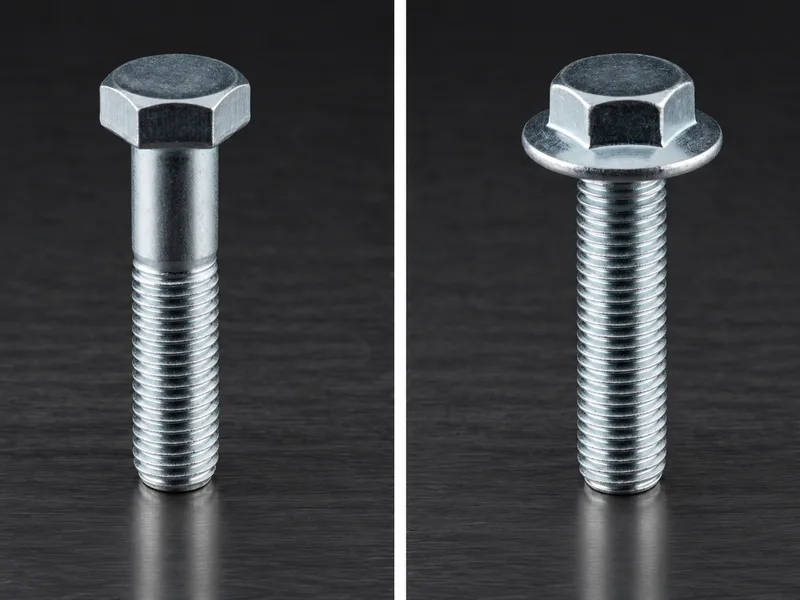
Specifications
Current supplyable range — owner-confirmed scope of supply; requirements outside this range are confirmed per quotation.
| diameter | Up to M36 / 1-1/2" (36 mm) |
|---|---|
| length | Up to 300 mm |
| thread | Metric (M), UNC/UNF, BSW/BSF |
| strength grade | Grade 8.8 / 10.9 / 12.9; A2-70 / A4-80 stainless |
| coating | Zinc plated (blue/yellow), Geomet, Dacromet, hot-dip galvanized |
| standard | DIN 933, ISO 4014/4017, JIS B 1180, ANSI/ASME B18.2.1, GB/T 5782/5783 |
| moq | 1000-10000 pieces by size |
| lead time | 3-7 days (stock); 15-25 days (high-strength/custom) |
| head type | Hex, socket head cap, carriage, flange |
| price from | USD 0.01-0.05/pc |
| structural supply scope | ASTM F3125/F3125M-26 incl. the new 144 ksi grade — confirmed supplyable via own production + outsourcing (owner decision 2026-10-31) |
Engineering guidance
Four decisions decide most bolted-joint outcomes: how much clamp force the joint needs, which tightening method delivers it, how the joint can fail, and which coating the grade tolerates. Each section below states the family-level rule; the full mechanisms and worked calculations live in the linked knowledge guides, and the grade pages under Available grades carry the per-grade figures.
Clamp force: what tightening actually delivers
Torque is a proxy for preload, and an indirect one: the usual breakdown of input torque is roughly 50% lost to friction under the head, 40% to thread friction, and about 10% that actually stretches the bolt. Because friction dominates, the same wrench reading produces different clamp force as surface finish, lubrication and coating change — clean lubricated threads run a nut factor near 0.10–0.15 while dry, corroded or reused fasteners run 0.20–0.30 or more, and even a calibrated torque wrench leaves ±25–30% scatter. A torque value written for bare steel will over-tighten a waxed or PTFE-coated bolt of the same size; coated assemblies need the reduced, coating-specific value.
The target is set by the joint calculation, not the wrench: preload is commonly specified as a percentage of yield or proof strength, with roughly 75% of yield (or 70–85% of proof load) as the working point that leaves margin for the tightening scatter. The preload equation, the tensile-stress-area input and a worked M10 class 8.8 example are in the preload and clamp-force calculation guide under Related knowledge.
Choosing the tightening method
Methods differ in how directly they control preload. Reference tables place them on a consistent accuracy ladder: tightening by feel around ±35%, a torque wrench ±25%, turn-of-nut ±15%, load-indicating (DTI) washers ±10%, bolt elongation ±3–5%, strain gauges ±1%. Where a joint genuinely needs controlled preload, torque alone is often the weakest acceptable choice, and the structural steel codes go further: the RCSC pretensioning methods (turn-of-nut, calibrated wrench, twist-off TC bolts, DTI washers) each carry their own verification discipline, such as daily Skidmore-Wilhelm calibration of the wrench on bolts from the working lot.
Two practical caveats from the same sources. TC bolts signal reached pretension by shearing their splined tail, but the calibration lives in the assembly's proprietary lubricant, so TC assemblies must not be re-lubricated in the field. And the tool itself drifts: a click-type wrench that met ±3% when new can degrade to ±5% or worse with heavy use, which only scheduled calibration against a known standard detects.
How bolted joints fail
Three failure families dominate bolted joints. Fatigue: cracks start where stress concentrates — the thread root (stress-concentration factor roughly 3.5–4.5), the first load-bearing thread, or the fillet under the head — and insufficient preload is the leading cited cause, because a loose joint lets the bolt feel the full cyclic load. Rolled threads, which cold-work the root into compressive residual stress, last roughly 2–3 times longer in fatigue than cut threads; and upgrading the grade helps far less than buyers expect because higher-strength steels are more notch-sensitive.
The other two families are environment-driven. Stress corrosion cracking combines tensile stress with a specific medium — chlorides against austenitic stainless above all — and both too little and too much preload can contribute. At elevated temperature, creep and stress relaxation permanently bleed preload out of the joint over time, which is why hot joints are re-checked. The fatigue numbers (endurance limits by grade and thread form) and the SCC environments are tabulated in the failure-modes knowledge guide.
Hydrogen embrittlement and the coating decision
Hydrogen embrittlement is a coating-process risk before it is a material property: during zinc, nickel, chromium or cadmium electroplating the fastener is the cathode, and atomic hydrogen generated at the surface is absorbed into the steel. Sensitivity rises with hardness — at roughly 1000 MPa tensile (about 32 HRC) and above, the risk is real, which is why the class 12.9 and A490 pages carry explicit coating constraints while class 8.8 does not.
The family-level rules: non-electrolytic zinc flake avoids the plating-bath hydrogen entirely and needs no post-coating bake, which is why it is the default above 1000 MPa; where electroplating is used on hardened parts, the relief bake must run promptly after plating and, per ASTM F1941, before passivation; and mechanical cleaning (shot blasting, brushing) replaces acid pickling with a zero-hydrogen step. Which coatings trap hydrogen versus let it escape, the bake sequencing traps and the failure-analysis limits are covered in the hydrogen-embrittlement knowledge guide.
Ordering & documentation
Documents
Shipments of Bolts are backed by Mill Test Certificate (MTC), Dimensional Report, Salt Spray Test Report on request, with full batch traceability from raw material to finished product. Quality management for this bolts line follows the owner-confirmed compliance list: ISO 9001:2015, RoHS, REACH. Exact document sets are confirmed on the order.
Quotation
- Bolt standard/designation, nominal diameter, thread pitch, overall length and threaded length.
- Property class/material grade, head style, and required coating or finish.
- Mating nut/washer, joint duty, and any specified preload, tightening method or friction condition.
- Quantity per size, destination and required material or inspection certificates.
Sample & supply
Supply source for Bolts: own manufacturing plus qualified outsourcing (per the owner-confirmed scope of supply (own production plus outsourcing)).
Minimum order quantity for bolts is 1,000–10,000 pieces depending on size (applies to the standard sizes and finishes for bolts; mixed, special or custom variants are quoted — final commercial terms per quotation) Stock items for this family run 3–7 days. High-strength and custom parts for this family run 15–25 days. Quantities or variants outside the standard range are confirmed at quotation.
Storage & shipping
Bolts are packed for export and shipped factory-direct to buyers in Europe, Asia, the Americas and the Middle East. Store these bolts dry and protected until installation, and keep coated parts in their packaging until use; specific packing and preservation requirements can be stated on the order and confirmed at quotation.
Bolt grades & standards
These pages separate bolt grades and standards from related threaded-rod, stud-bolt and eye-bolt forms. Check each designation against its own product standard, dimension series, material, thread form and application.
Choosing between grades? See the hex bolt grade comparison — Class 8.8 vs 10.9 vs 12.9 vs ASTM A307 / A325 / A490, side by side. Working on a structural steel joint? Start from the structural bolting hub (ASTM F3125) — grades, installation routes and verification in decision order.
- SAE J429 Grade 5 Bolts
- SAE J429 Grade 8 Bolts
- ISO 4014 Hex Bolts (Partially Threaded)
- ISO 4017 Hex Screws (Fully Threaded)
- ISO 4014 vs ISO 4017 — Choosing Partial or Full Thread
- SAE J429 Grade 2 Bolts
- DIN 975 Threaded Rod
- DIN 976 Threaded Rod
- ASTM A193 Grade B7 Stud Bolts
- ASTM A193 Grade B7M Stud Bolts
- ASTM A193 Grade B8 Stud Bolts
- ASTM A193 Grade B8M Stud Bolts
- ASTM A193 Grade B8M3 Stud Bolts (Class 2C)
- GB/T 15389-2025 Threaded Rod
- Tension Control (TC) Bolts — F3125 F1852
- DIN 6921 Hex Flange Bolts
- ASTM A449 Bolts
- ASTM A354 Bolts (Grades BC and BD)
- U-Bolts by Pipe Size (IFI-136 Waterworks Series)
- DIN 931 Hex Head Bolts (Partially Threaded)
- DIN 933 Hex Head Screws (Fully Threaded)
- DIN 186 T-Head Bolts
- DIN 188 T-Head Bolts with Double Nib
- DIN 478 Square Head Bolts with Collar
- DIN 479 Square Head Bolts with Short Dog Point
- DIN 480 Square Head Bolts with Collar and Dog Point
- DIN 103 Trapezoidal Thread Rods (Tr)
- ISO 8765 Hex Head Bolts (Fine Pitch)
- EN 14399-4 Hex Bolts with Large Head (System HV)
- DIN 6914 Hex Bolts with Large Head (System HV)
- DIN 604 Flat Countersunk Nib Bolts
- DIN 607 Cup Head Nib Bolts
- DIN 609 Hex Fit Bolts (Fitted Shank)
- DIN 610 Hex Fit Bolts (Short Thread)
- DIN 558 Hex Head Screws (Product Grades C, Long Series)
- ANSI/ASME B18.2.1 Hex Bolts (Inch Series)
- ANSI/ASME B18.15 Lifting Eye Bolts (Shoulder Type)
- ASME B18.15 Forged Eye Bolts (Inch Series, Plain and Shoulder Patterns)
- Mechanical Joint T-Head Bolts (ANSI/AWWA C111) — Per-Pipe-Size Chart
- Flanged Joint Heavy Hex Bolts (ANSI/AWWA C115/C110) — Per-Pipe-Size Chart
- ASME B18.31.2 Continuous Thread Studs — UNC Threads, 1/4 – 4 in
- DIN 1478 Turnbuckle Bodies (Closed Body)
- DIN 1480 Turnbuckles, Forged (Open Form)
- DIN 938 Double-End Studs (Metal End ≈ 1 d)
- DIN 939 Double-End Studs (Screwed-In End ≈ 1.25 d)
- DIN 835 Double-End Studs (Screwed-In End ≈ 2 d)
- DIN 525 Studs for Welding
- DIN 605 Flat Countersunk Square Neck Bolts (Long Square)
- DIN 608 Flat Countersunk Square Neck Bolts (Short Square)
- ISO 4016 Hexagon Head Bolts, Production Class C
- ISO 4018 Hexagon Head Screws, Production Class C
- ISO 7411 HV Structural Bolts
- BS 4439 Metric Screwed Studs
- ISO Metric Hexagon Hardware — Head, Nut and Washer Dimensions
- DIN 960 Hex Bolts (Fine Pitch, Partially Threaded)
- DIN 961 Hex Screws (Fine Pitch, Fully Threaded)
- ASME B18.2.3.3M Heavy Hex Screws (Metric)
- ASME B18.2.3.4M Hex Flange Screws (Metric)
- ASME B18.2.3.9M Heavy Hex Flange Screws (Metric)
- ASME B18.2.6M Heavy Hex Bolts (Metric)
- ASME B18.31.1M Metric Continuous-Thread Studs (Double-End, Full Body)
- ASME B18.2.6 Heavy Hex Structural Bolts (Inch, ASTM A325/A490)
- GB 5783-1986 Hexagon Head Bolts, Full Thread, Product Grades A and B
- GB/T 5781-2025 Hexagon Head Bolts, Full Thread, Product Grade C
- GB/T 5786-2016 Hexagon Head Bolts with Fine Pitch Thread, Full Thread
- DIN 261 Tee-Head Bolts
- DIN 7964 Reduced Shank Bolts and Screws with Coarse Thread
- DIN 601 Hexagon Head Bolts, Product Grade C
- DIN 787 Bolts for T-Slots
- DIN 7999 High-Strength Hexagon Fit Bolts for Structural Bolting
- DIN 940 Studs, Metal End ≈2,5d
Engineering references
Dimension charts and technical reference tables for bolts — engineering aids for selection and verification, not a statement of the orderable range. Supply availability is confirmed per quotation.
- ISO 2904 Metric Trapezoidal Screw Threads — engineering reference
- Elongation Chart for Common Bolting Materials — engineering reference
- Spanner and Wrench Clearance Around Bolt Heads — engineering reference
- Steel Bolt Strength Designation System — engineering reference
- Mechanical Properties Chart (Property Classes) — engineering reference
- Grade Markings for Metric Fasteners — engineering reference
- DIN 2510 L/NF Stud Bolt and Nut Weight Chart — engineering reference
- ASME B16.5 / DIN 976 Full-Thread Stud Weight Chart (Imperial and Metric) — engineering reference
- Steel Threaded Rod Capacities (ASTM A36, Pipe Support Hangers) — engineering reference
Engineering reference
Engineering reference tables that go beyond this product line — conversions, loading capacities, stress areas and spacing rules used across fastened joints. The full set lives in the engineering reference library.
- AASHTO to ASTM Standard Conversions — Fastener and Structural Designations Chart
- US Bolt Grades & Strength Chart — SAE Grades 1–8.2 and ASTM A307/A449/A325/A354/A490, Minimum Strengths
- Bolt Root and Tensile Stress Area
- BS 449 Bolt Loading Capacities — Grade 10.9
- BS 449 Bolt Loading Capacities — Grade 12.9
- BS 449 Bolt Loading Capacities — Grade 4.6
- BS 449 Bolt Loading Capacities — Grade 6.8
- BS 449 Bolt Loading Capacities — Grade 8.8
- BS EN ISO 898-1:2013 Screw Loads (Proof, Tensile, Tightening Torque)
- Bolt Edge Distance and Spacing — BS 5950 Legacy Data
Frequently asked questions
Are DIN 933 and ISO 4017 hex bolts interchangeable?
Both designations cover fully threaded hex head bolts and both are in our quoted range, so orders arrive keyed to either designation. DIN and ISO editions differ in head and thread tolerances in the details, so the safe rule is to order exactly the designation your drawing calls out. If your drawing lists a designation we have not mentioned, send it with the RFQ and the quote will confirm matchability before production.
What is the minimum order quantity and lead time for bolts?
The minimum order quantity is 1,000–10,000 pieces depending on size. Stock items ship in 3–7 days; high-strength and custom parts in 15–25 days. Quantities, coatings or thread forms outside the standard range are confirmed at quotation against the current production schedule.
What should I include in a bolt RFQ to get a usable quote?
Send the standard designation (for example DIN 933 or ANSI/ASME B18.2.1), diameter and length, thread type (metric M, UNC/UNF or BSW/BSF), property class (8.8 / 10.9 / 12.9 or A2-70 / A4-80 stainless), coating, quantity per size, and destination country. A drawing or a sample also works — first-article inspection against it is part of the sample stage.
Related knowledge
- What Bolt Property Classes 8.8, 10.9 and 12.9 Encode — and When High Strength Stops Being the Right Choice
- Bolt Grade Selection: ISO 898-1 8.8/10.9/12.9 vs ASTM A307 and A325
- 8.8 vs 10.9 vs 12.9 Bolts: Strength, Hardness and Cost — What the Evidence Settles
- Calculating Bolt Preload and Clamp Force: Torque, Friction and Tightening Method
- How to Determine Tightening Torque and Choose a Tightening Method for a Bolted Joint
- Fastener Failure Modes: Which Fatigue, Creep and SCC Controls the Evidence Supports
- Hydrogen Embrittlement in High-Strength Bolts: Which Grades Need Controls, Which Coatings and Baking Schedules Are Acceptable, and What to Require Before the RFQ
Request a Quote
Get factory-direct pricing from the manufacturer.
What to include in your Bolts inquiry
- ✓ Name the bolt standard and product form, then give nominal diameter, pitch, length and threaded length.
- ✓ State the applicable property class or material grade, head style, and coating or finish.
- ✓ Identify the mating nut/washer and the joint duty; include any specified preload, tightening method or friction condition.
- ✓ Give quantity per size, destination and required material or inspection certificates.
- ✓ Factory-direct pricing for your Bolts
- ✓ Standard and custom specifications
- ✓ Factory-direct export to buyers in Europe, Asia, the Americas and the Middle East
- ✓ Full fastener family support